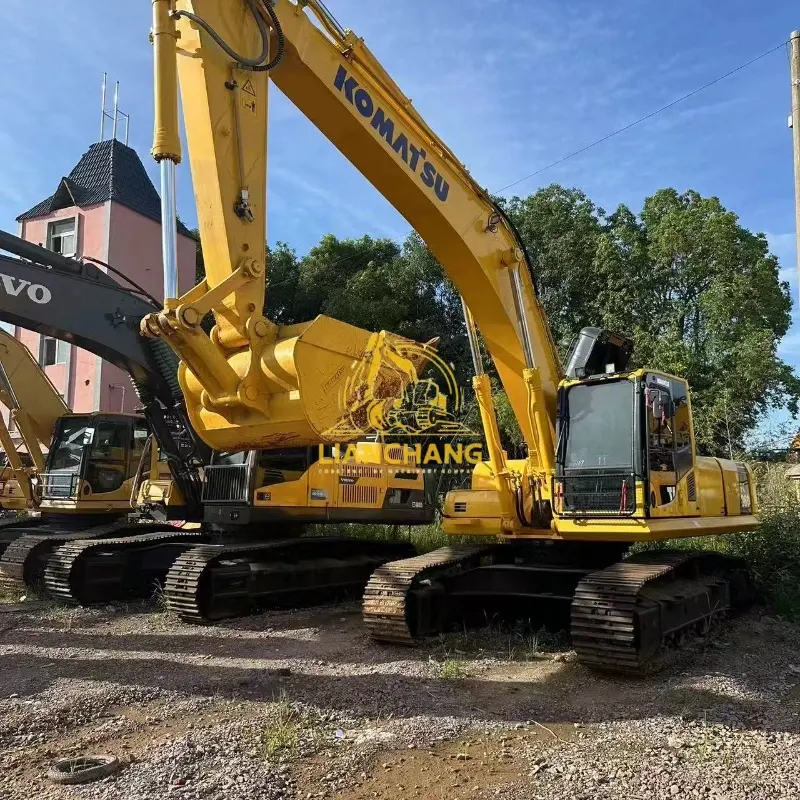
Tailles d'excavatrices : Choisir la bonne pour votre projet
Release time: 2026-03-13
Choosing the right excavator size can make or break the efficiency, cost, and success of your construction project. Whether you’re digging foundations, handling demolition, landscaping, trenching, or heavy mining work, selecting the correct machine size ensures better productivity, lower fuel costs, and reduced wear on equipment. In this guide, I’ll walk you through the different excavator sizes, their applications, and how to choose the best one for your specific project needs.
Why Excavator Size Matters
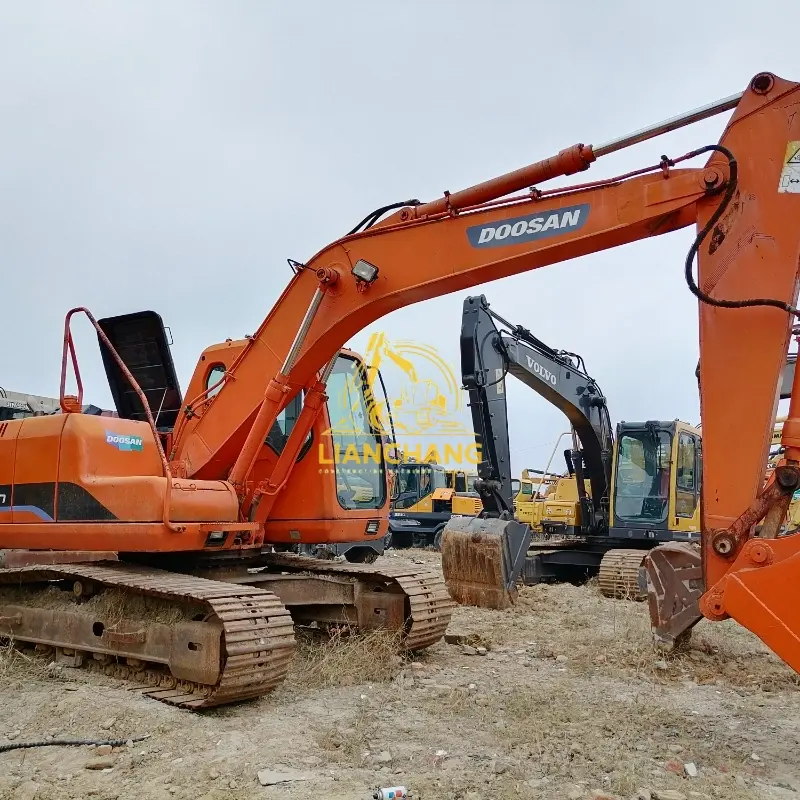
Excavators come in a wide range of sizes, from compact mini units to ultra-large mining machines. Each size category is designed for different workloads and environments.
The right size impacts:
- Digging depth and reach
- Lifting capacity
- Fuel consumption
- Transportation costs
- Jobsite access
- Ground impact
- Attachment compatibility
Using an oversized excavator for a small urban project can increase costs unnecessarily, while an undersized machine on a heavy-duty site can slow progress and create safety risks.
That’s why understanding excavator size classes is the first step toward a smart purchase or rental decision.
Common Excavator Size Categories
1) Mini Excavators (1–6 Tons)
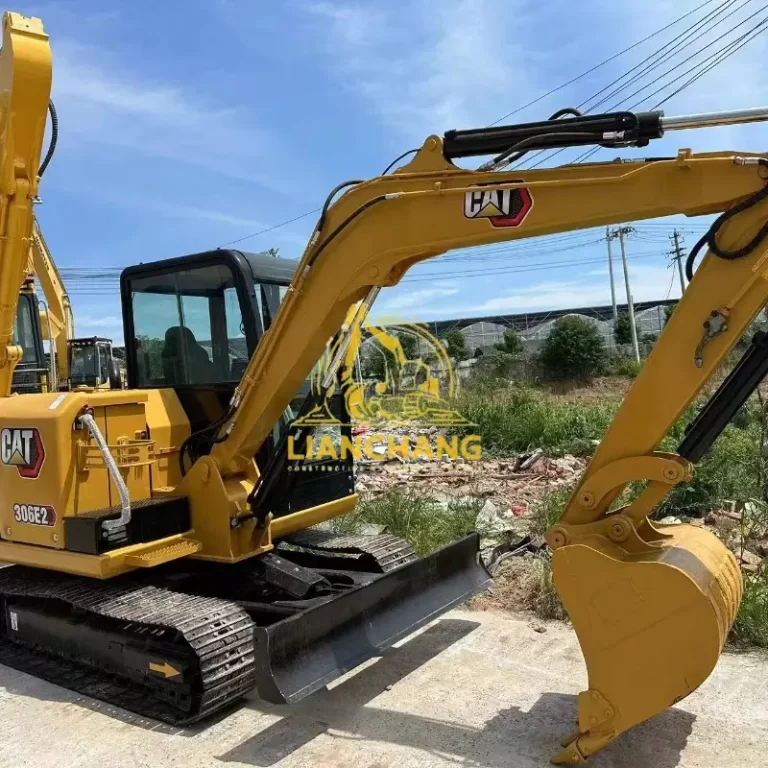
Mini excavators are the most versatile choice for tight spaces and light-duty jobs.
Best for:
- Residential landscaping
- Small trenching projects
- Utility installation
- Indoor demolition
- Farm and garden work
Advantages
- Easy to transport
- Lower operating cost
- Minimal ground damage
- Excellent maneuverability
- Ideal for urban spaces
If your project involves narrow access points, backyard work, or indoor renovations, a mini excavator is usually the best solution.
2) Midi Excavators (6–10 Tons)
Midi excavators fill the gap between compact machines and full-size models.
They offer:
- Better digging depth than mini excavators
- Stronger lifting power
- Improved hydraulic performance
- Easier transport than large machines
Best for:
- Medium trenching
- Road repair
- Drainage systems
- Small commercial construction
For contractors needing more power without sacrificing mobility, midi excavators are often the sweet spot.
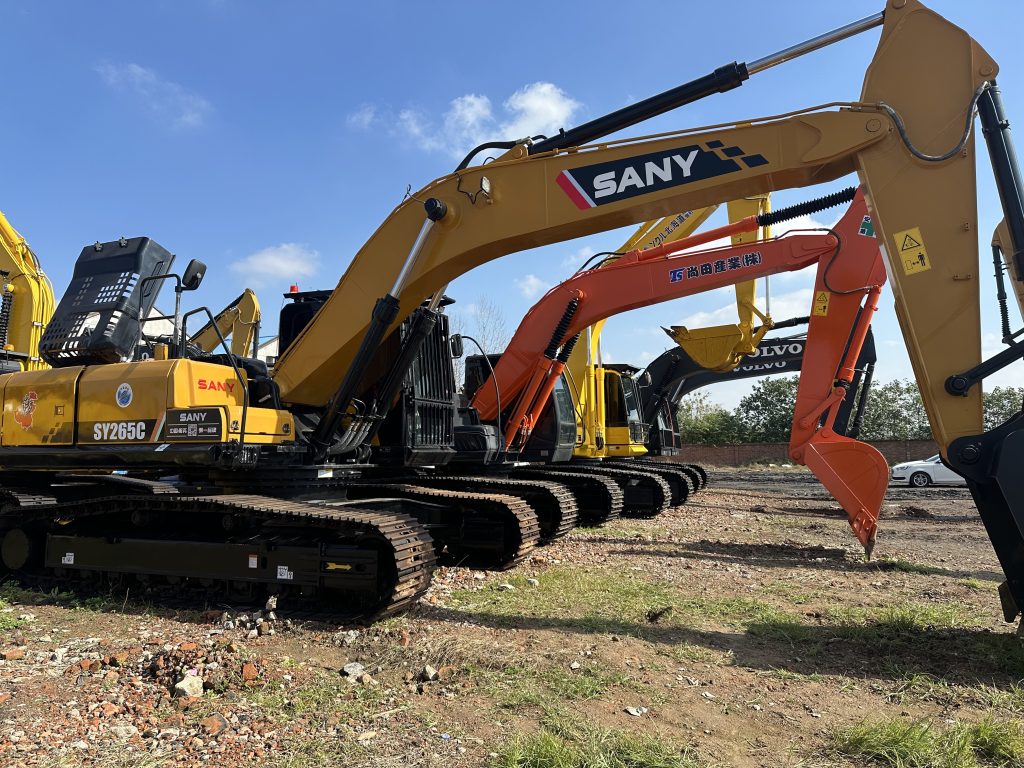
3) Standard Excavators (10–45 Tons)
This is the most common size range used across construction sites worldwide.
Standard excavators are highly adaptable and can handle:
- Foundation excavation
- Road construction
- Pipeline projects
- Material loading
- Démolition
- Quarry work
Their balance of power, reach, and attachment flexibility makes them suitable for most medium to large-scale projects.
This size category is ideal for contractors who need one machine capable of handling multiple job types.
4) Large Excavators (45+ Tons)
Large excavators are built for maximum digging force and production.
Common uses include:
- Mining
- Quarrying
- Heavy demolition
- Large earthmoving
- River dredging
- Infrastructure megaprojects
These machines provide:
- Deep excavation capability
- Massive bucket capacity
- High breakout force
- Long continuous operating cycles
They are best suited for projects where productivity per hour is the main priority.
Key Factors When Choosing Excavator Size
Selecting the right excavator is about more than just machine weight.
1. Project Scope
Start by defining the scale of the work.
Ask:
- How deep do you need to dig?
- How much material must be moved daily?
- Will you lift heavy objects?
- How long will the project last?
A small landscaping job may only need a 2-ton mini excavator, while a highway project could require a 30-ton standard unit.
2. Jobsite Space
Space limitations play a major role.
If the site includes:
- Narrow streets
- Residential backyards
- Indoor environments
- Limited turning room
Then compact excavators are the safer and more efficient option.
For open land development, larger machines maximize output.
3. Soil Conditions
Hard clay, rock, wet soil, or loose sand all affect machine performance.
Heavier excavators provide:
- Better stability
- More breakout force
- Improved traction
For soft ground, however, a lighter excavator may reduce sinking and ground damage.
4. Transportation and Logistics
Larger excavators require:
- Low-bed trailers
- Permits in some regions
- Higher fuel during transport
- More loading time
If your machine frequently moves between multiple sites, transport efficiency becomes a major cost factor.
5. Attachment Requirements
Your project may need:
- Hydraulic breakers
- Augers
- Grapples
- Screening buckets
- Crusher buckets
- Compacteurs
Not every excavator size supports every attachment efficiently.
The hydraulic flow rate and lifting stability must match the attachment requirements.
Excavator Size Selection by Project Type
Here’s a simple reference guide:
| Type de projet | Recommended Excavator Size |
|---|---|
| Landscaping | 1–3 tons |
| Residential trenching | 2–6 tons |
| Commercial foundations | 10–20 tons |
| Road construction | 20–35 tons |
| Démolition | 15–45 tons |
| Quarry/mining | 45+ tons |
This quick comparison can help narrow down the right machine class before comparing brands.
New vs Used Excavator: Does Size Choice Change?
When buying a excavatrice d'occasion, size selection becomes even more important.
A correctly sized used machine can provide:
- Lower upfront investment
- Faster ROI
- Easier maintenance
- Better resale value
- Lower parts consumption
For example, many contractors overspend on larger used excavators simply because the purchase price seems attractive. But oversized machines often lead to higher fuel, transport, and maintenance costs over time.
The smarter strategy is to buy the smallest excavator that can comfortably handle your heaviest regular task.
Pro Tips for Contractors and Buyers
Here are practical buying tips from an equipment selection perspective:
Choose Based on 80% of Your Work
Select the excavator size that fits the majority of your projects, not rare one-off tasks.
Think About Attachments First
If you frequently use crusher buckets, breakers, or grabs, prioritize hydraulic capacity over just machine weight.
Consider Future Expansion
If your business is moving into larger civil projects, upgrading one size class higher may be strategic.
Don’t Ignore Operator Skill
Large excavators require experienced operators. A smaller machine in skilled hands often outperforms an oversized one.
Final Thoughts
Understanding excavator sizes is essential for maximizing efficiency, reducing project costs, and improving equipment ROI. From mini excavators for landscaping to heavy-duty mining giants, the best machine is always the one that matches your jobsite conditions, material volume, and attachment needs.
Before buying or renting, evaluate your project size, soil conditions, site access, and transport costs. The right excavator size doesn’t just improve productivity—it directly impacts profitability.
If you’re planning to invest in a machine this year, choosing the right excavator size for your project is one of the smartest decisions you can make.